Name the experience you are seeking
“A design hotel” is too broad to be a useful requirement. You may want to inhabit a carefully preserved interior, study a particular structural system, experience a converted industrial building, or simply wake up with a strong relationship to the landscape. Write that interest in one sentence before comparing properties.
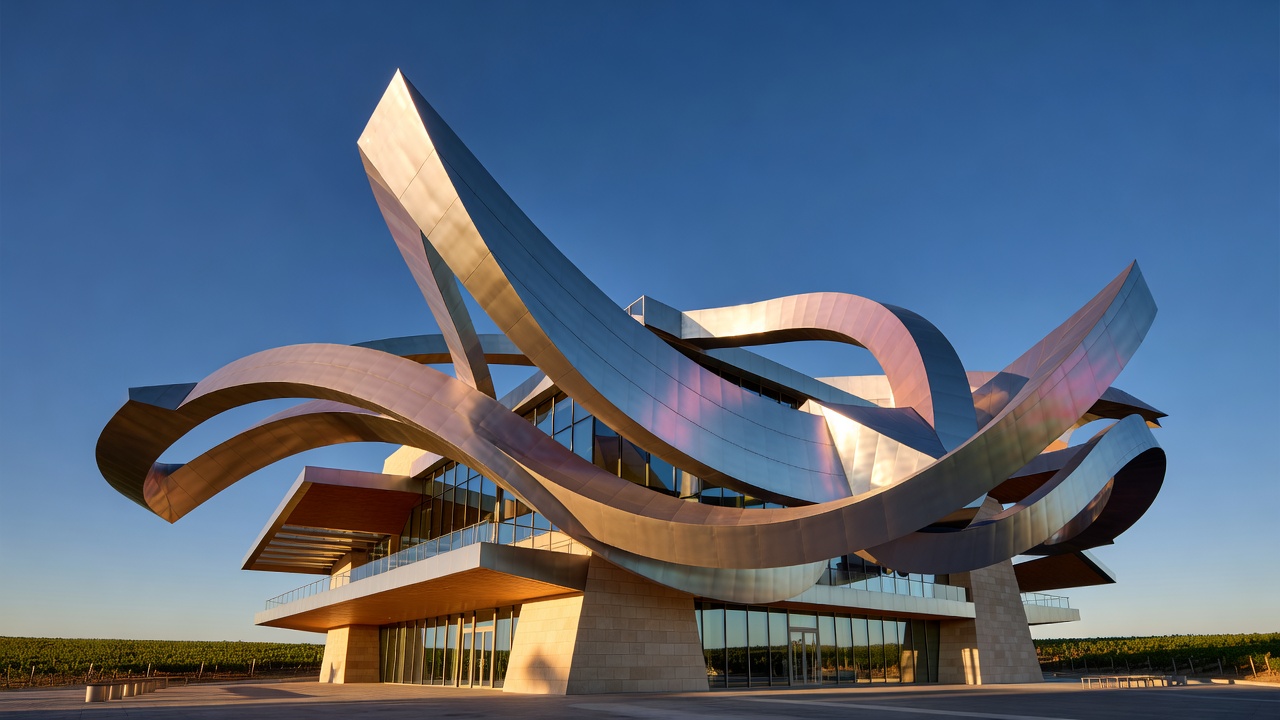
Then identify which parts of the hotel deliver it. At the TWA Hotel, the historic terminal supplies much of the architectural encounter, while bedrooms sit in later wings. At Benesse House, the particular accommodation building shapes your relationship to art, landscape and circulation. At Hotel Marqués de Riscal, a famous exterior composition does not mean every room shares the same outlook.
Sometimes an overnight stay is not necessary to satisfy your curiosity. A permitted public visit, guided tour or meal may provide the encounter you want. Check current access rules and never assume that guest corridors, terraces or bathing spaces are open to non-residents.
Compare rooms, not just properties
Choose two or three room categories and compare them on the same terms. Record the building or wing, outlook, floor area, bed arrangement and bathroom configuration. Separate confirmed information from unanswered questions. A category title such as “design,” “heritage” or “panoramic” is not a standardised specification.
Ask whether published photographs show the exact layout, one representative example or an exceptional suite. Converted buildings often contain substantial variation within a single category. If a particular feature is essential, request written confirmation and establish whether it can actually be guaranteed rather than merely noted as a preference.
Be wary of comparing headline room rates without the surrounding conditions. Cancellation terms, taxes, breakfast, transfers and admission to associated facilities can change the overall choice. We do not publish live prices because a static architectural guide cannot reliably represent a current booking offer.
Make access questions specific
Accessibility is a route, not a badge. Think from arrival to reception, then to the room, bathroom, restaurant and any facility central to your visit. Ask about gradients, thresholds, lift dimensions and the availability of an alternative to ceremonial stairs. A property may have a step-free entrance while some room categories remain inaccessible by that route.
Describe your own requirements rather than asking only whether the hotel is accessible. If relevant, request clear door widths, transfer space beside the bed, shower details and the position of controls. For sensory needs, ask about lighting, alarms, quiet routes and the predictability of public-space activity.
Older buildings can offer excellent adaptations, and new buildings can still contain difficult details. Do not infer performance from age or appearance. The useful evidence is a current description of the actual route and room, supported by dimensions or photographs when needed.
| Priority | Record for each room | Decision rule |
|---|---|---|
| Architectural interest | Specific building, space or feature | It must be genuinely available to experience |
| Sleep | Room location, nearby activity, curtains | Resolve any essential quiet or darkness need |
| Access | Complete route and room dimensions | Confirm requirements before committing |
| Thermal comfort | Cooling, heating and window operation | Match the season and your comfort needs |
| Booking conditions | Total inclusions and cancellation terms | Compare like with like |
Ask how the building behaves
Architecture is experienced through temperature and sound as well as sight. Large windows may bring welcome winter light and unwanted summer heat. A courtyard can offer a sheltered view or carry dining noise upward. Thick-looking walls may conceal lightweight additions. None of these observations proves a problem; each suggests a useful question.
Ask about room-level climate controls, seasonal cooling arrangements, openable windows and blackout provision. For noise, identify what lies above, below and beside the room: a lift, event space, restaurant terrace or service route. A “quiet room” request is more useful when you explain what kind of sound most affects you.
Also check the destination beyond the property line. A remote landmark may require a transfer that dominates a short visit. An airport hotel may be convenient for one terminal and less straightforward for another. Architecture is part of a journey, not a substitute for understanding it.
Keep claims and preferences separate
Give each shortlisted stay two short notes: what is documented, and what you personally expect to enjoy. The first might identify an architect, retained structure or confirmed room arrangement. The second might describe a preference for enclosed courtyards or exposed materials. This prevents reputation from doing all the deciding.
Apply the same care to sustainability language. Reuse, timber construction and local materials can be meaningful, but none provides a complete environmental assessment alone. Look for the scope and date of any certification or measured claim. Choose with informed curiosity rather than demanding that a compelling photograph answer questions it cannot resolve.
A concise message to send before booking
“I am considering [room category] for [dates]. Please confirm the building or wing, step-free route, bathroom arrangement, outlook, nearby event spaces and cooling provision. Are the photographs representative of this category, and which requested features can be guaranteed?”